- 5 October 2026
A New Era for Cannock Resprays
Cannock Resprays has relaunched under new ownership. Natalie and Lewis talk about taking on the business, growing demand and their plans for the future.
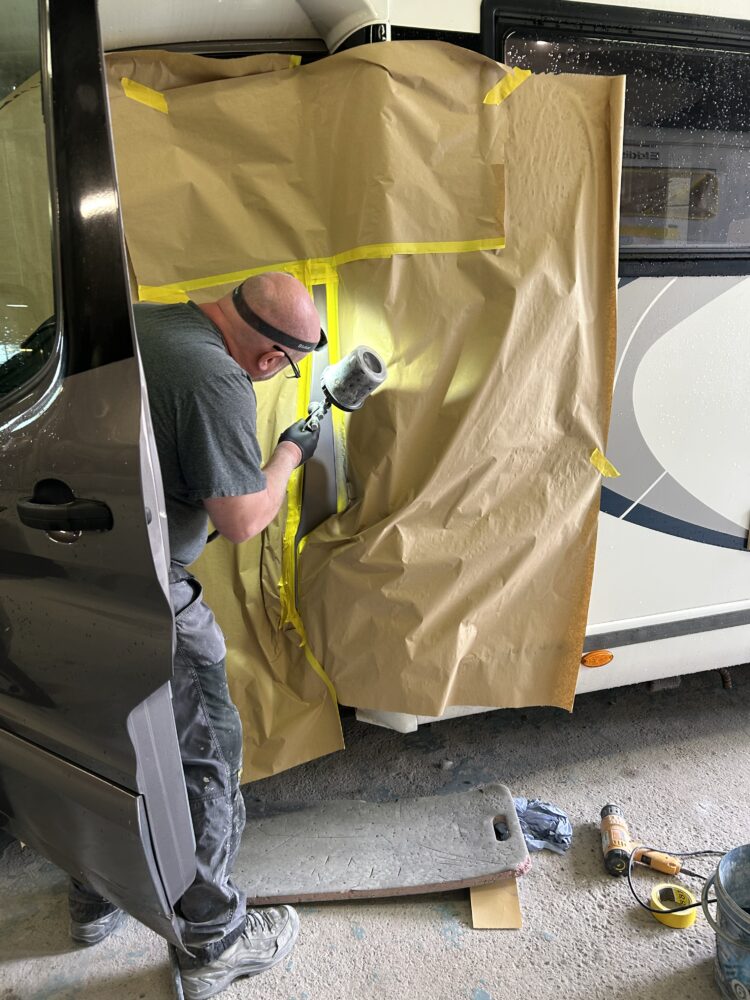
If you’ve ever had a repair quote and wondered why the price depends so much on where the damage is, the answer usually comes down to the material. Motorhomes aren’t built from one single material. Most use a mix, chosen for weight, insulation and cost and each one reacts differently when it’s damaged.
GRP (also known as fibreglass), aluminium and composite panels all need a different repair approach and knowing which you’re dealing with is the first step to getting it fixed properly. In this guide we’ll explore the most common motorhome construction materials and explain why it’s worth having motorhome repairs carried out by technicians who understand how each one behaves.
GRP also known as fibreglass, is commonly used for the roof, front and rear mouldings as well as high-moisture interiors.
Why It’s Used:
GRP is light, strong and can be moulded into smooth, curved shapes. It also stands up well to weather and moisture over time.
How It Behaves When Damaged:
When damaged, the GRP cracks instead of denting and in some cases delaminates, meaning the layers inside the panel start to separate. This isn’t always obvious from the outside and a small crack on the surface can hide a much bigger problem underneath. This is why it’s always worth having the GRP damage looked at properly, rather than simply filled in.
How We Repair It
We match the repair to the original panel, using the right resin and fibre for the job. Rather than just filling the crack, we rebuild the strength of the panel underneath, so the repair actually lasts, not just looks right.
Aluminium is often used for the outer skin of the side walls, particularly on older models as well as trims and some structural parts. How the frame is built varies by manufacturer.
Why It’s Used
Popular for its lightweight feel and natural corrosion-resistance, aluminium is a low maintenance option for motorhomes, without compromising on strength.
How It Behaves When Damaged
On impact aluminium tends to dent or crease. Repeated work will harden the metal, making it more brittle over time and if stretched the panel will need replacing rather than repairing.
How We Repair It
We assess the extent of the damage first, since not every dent needs the same approach. Where the panel can be worked back into shape, we do it carefully to avoid stretching or work-hardening the metal further. Where the damage is more significant, we’ll talk you through whether a repair or a replacement panel makes more sense.
Many modern motorhomes use composite panels which are made from multiple bonded layers with a foam or timber core sandwiched between thin outer skins.
Smaller components like trims, corner pieces and bumpers are commonly made from ABS, a moulded plastic, rather than the full sandwich construction used for the larger panels.
Why It’s Used
Favoured for being lightweight and rigid, composite materials give manufacturers strength without adding unnecessary weight, while also helping insulate the living area from heat, cold and noise.
How It Behaves When Damaged
Composite panels can be deceptive when damaged. An impact can crush the core or break the internal bond between the skin and the core, while the outer surface still looks intact. This means the damage isn’t always visible from the outside, and a panel that looks fine at a glance can be significantly weaker underneath. This is one of the reasons a proper assessment matters more than a quick visual check.
How We Repair It
We check beyond the surface, not just the visible damage, to understand what’s happening with the core and the bond underneath. Depending on what we find, that might mean a targeted repair to the affected area or replacing the panel section entirely if the core has been significantly compromised.
As we’ve covered, the range of motorhome construction materials all behave differently when damaged and each require a different repair approach to put right properly.
That’s why motorhomes that have been involved in an accident or have damage to its construction is worth having assessed by a specialist. A general car body shop may not see much GRP, composite or bonded construction. A motorhome repair specialist works with these materials regularly and knows how to repair them without causing further damage.
We always start with an honest assessment of the material and the extent of the damage before quoting for any repair. It affects the method, the cost and the timescale, so it’s worth knowing from the outset rather than finding out partway through the job.
If you’re not sure what your motorhome’s bodywork is made of, or you’ve had damage and want an honest opinion on what’s involved, get in touch and we’ll take a look.

Cannock Resprays has relaunched under new ownership. Natalie and Lewis talk about taking on the business, growing demand and their plans for the future.